

Radar resilience is no longer defined only by hardware performance. In modern defence environments, the more important question is how well a radar system, its processing chain, and its operators can respond when the electromagnetic environment changes.
Interference, jamming, deception, dense spectrum activity, and multiple emitters can quickly turn a clean radar picture into an uncertain one. In such conditions, detection alone is not enough. Engineers and operators must understand how signals behave, how processing chains react, and how counter-countermeasures can restore confidence in the radar picture.
This is where electronic counter-countermeasures, or ECCM, become a core training requirement. ECCM training connects radar theory with operational resilience by allowing users to study disturbed signal environments, test filtering strategies, and analyse how radar systems respond under pressure.
SkyRadar’s work focuses on this training and simulation layer. Through environments such as FreeScopes and SkySim, users can work with real radar measurements, simulated radar data, interference scenarios, deception effects, and signal-processing tools in a controlled setting.
The objective is not automation for its own sake, but explainable adaptation: helping engineers and trainees understand what the radar system is sensing, how it is evaluating the situation, and which processing strategies may help it adapt.
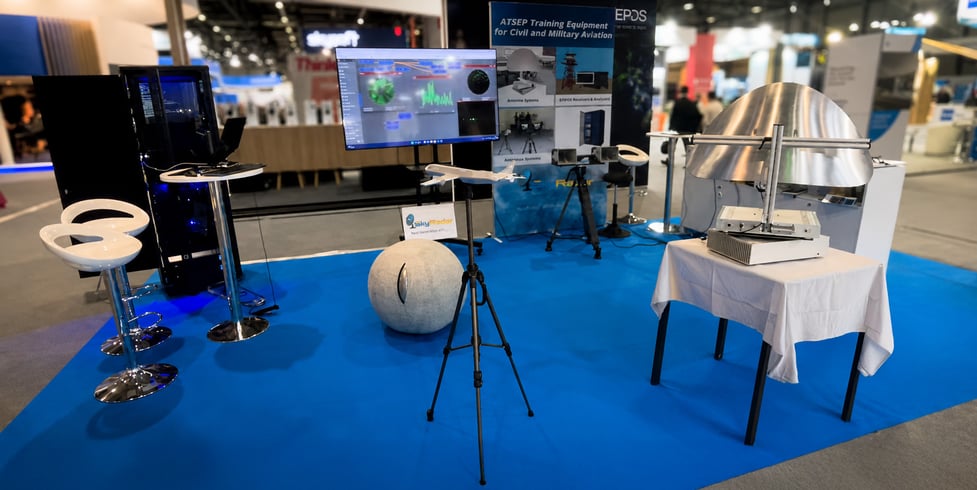
As Eurosatory 2026 approaches, these questions are becoming increasingly relevant for defence organisations, military academies, research institutes, and technical training centres. At the exhibition in Paris, SkyRadar will present radar and electronic warfare training technologies designed to explore this shift from static radar performance to adaptive spectrum resilience.
|
Luxembourg Pavilion |
From Radar Performance to Radar Resilience
Traditional radar training often focuses on detection, range measurement, Doppler behaviour, target tracking, and signal interpretation. These remain essential foundations. However, modern defence environments require an additional layer of understanding: how radar systems behave when the electromagnetic environment becomes hostile or congested.
Electronic attack techniques may attempt to reduce radar performance, obscure real targets, create false targets, or force operators and systems into uncertainty. These conditions cannot be understood only through theory. They must be examined through controlled scenarios where engineers and trainees can observe how signals change, how filters respond, and how detection strategies perform.
ECCM training therefore connects radar theory with operational resilience. It helps users understand not only whether a radar can detect a target, but how that detection may be affected by interference, deception, or changing spectrum conditions.
Typical Challenges in ECCM Training
Contested electromagnetic environments may involve several forms of disturbance.
These include:
- broadband or targeted jamming
- deceptive signal injection
- range deception
- spectrum congestion
- multiple emitters operating in the same area
In more advanced training contexts, scenarios may also include adaptive or repeated changes in the signal environment.
For engineers, the challenge is to understand what is happening inside the signal chain. For operators and analysts, the challenge is to recognise patterns, interpret system behaviour, and make decisions under uncertainty.
This is where realistic training environments become important. A purely theoretical description of jamming or deception does not show how the signal looks, how the radar processing chain reacts, or where false confidence may appear.
SkyRadar’s Approach to ECCM Training
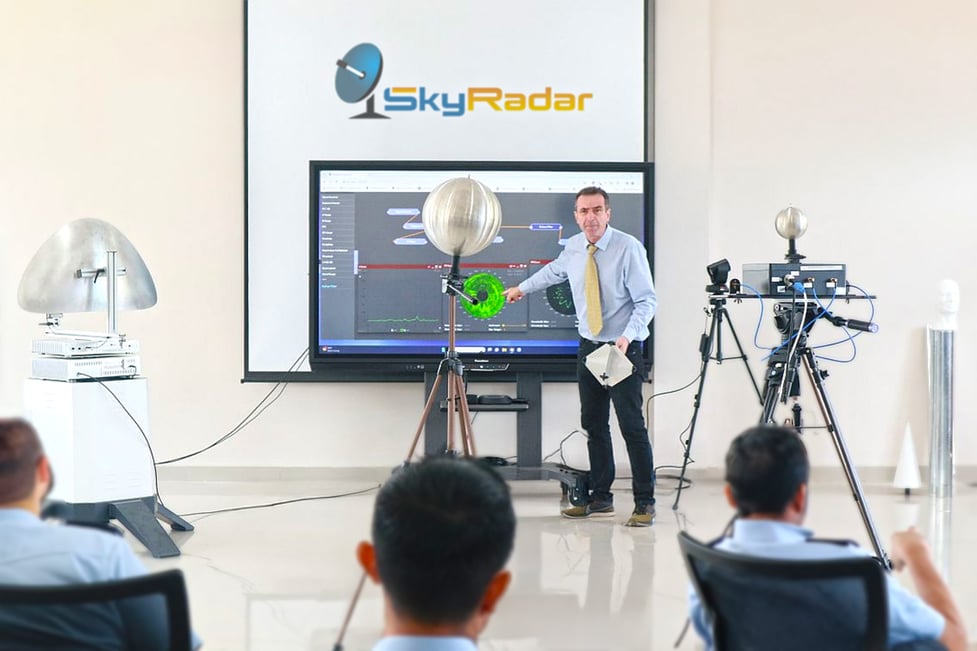
SkyRadar provides radar training and simulation environments where users can work with radar signals, electronic interference scenarios, and signal-processing tools in a controlled setting.
The training approach combines real radar measurements, simulated radar data, and analysis environments such as FreeScopes and SkySim. This allows users to compare normal radar behaviour with disturbed or deceptive scenarios.
In ECCM-related exercises, users can study topics such as:
- jamming effects
- disturbance filtering
- range deception
- radar signal resilience
- adaptive processing strategies
The purpose is not to create abstract demonstrations, but to help engineers and trainees understand the mechanisms behind the behaviour.
This is especially important for defence research organisations, military academies, universities, and technical training centres that need to prepare specialists for complex electromagnetic environments.
Training Beyond Static Scenarios
One of the main lessons of modern electronic warfare is that static capability is not enough. Systems and operators must be able to adapt.
Radar systems may need to change frequency, modify processing strategies, apply filtering methods, or interpret signals differently depending on the conditions. At the same time, human operators and engineers must understand why these adaptations are taking place.
This is why ECCM training must go beyond simple “normal versus jammed” demonstrations. It should allow users to explore the interaction between radar signals, interference, filtering, detection, and decision-making.
SkyRadar’s training environments support this kind of exploration by allowing users to observe signal behaviour, test processing chains, and study how radar systems respond under different conditions.
Simulation, Digital Twins, and Explainable Adaptation
Modern radar and electronic warfare training cannot depend only on static demonstrations. Algorithms and counter-countermeasure strategies must be tested in changing electromagnetic conditions before users can understand their strengths and limits.
Simulation environments and digital twins make this possible by allowing engineers to create controlled radar and spectrum scenarios, compare processing outcomes, and repeat exercises under different assumptions. This helps trainees move beyond memorising techniques and towards understanding how adaptive radar behaviour develops in practice.
For SkyRadar, this is closely connected to the principle of sense, evaluate, and adapt. Radar systems and training environments must not only collect data; they must help users evaluate what is happening and understand which adaptation strategy is appropriate.
AI-Supported Radar and EW Analysis
Artificial intelligence can support radar and electronic warfare analysis, but it must remain explainable and trusted. In technical training, the aim is not to treat AI as a black box, but to help engineers understand how models are trained, evaluated, and applied to radar or spectrum data.
SkyRadar’s FreeScopes AI environment introduces these ideas through a visual framework where neural networks can be constructed and trained using radar or spectrum data. This allows users to explore AI-supported signal interpretation while maintaining focus on transparency, validation, and operator understanding.
When combined with radar measurements, SkySim scenarios, and ECCM exercises, AI-supported analysis can help users study signal signatures, interference patterns, anomaly detection, and classification problems in a practical training environment.
Why This Matters for Eurosatory 2026
At Eurosatory 2026 in Paris, many discussions will focus on defence readiness, electronic warfare, spectrum dominance, and the technologies required to operate in contested environments.
ECCM training is directly connected to these themes. Defence organisations need not only advanced systems, but also engineers, analysts, and operators who understand how those systems behave under pressure.
The ability to train with radar data, simulated interference, and controlled electronic warfare scenarios helps close the gap between equipment, doctrine, and real technical understanding.
Meet SkyRadar at Eurosatory 2026
SkyRadar will be present at Eurosatory 2026 in Paris from 15–19 June 2026.
Visitors can meet the SkyRadar team at:
|
Luxembourg Pavilion |
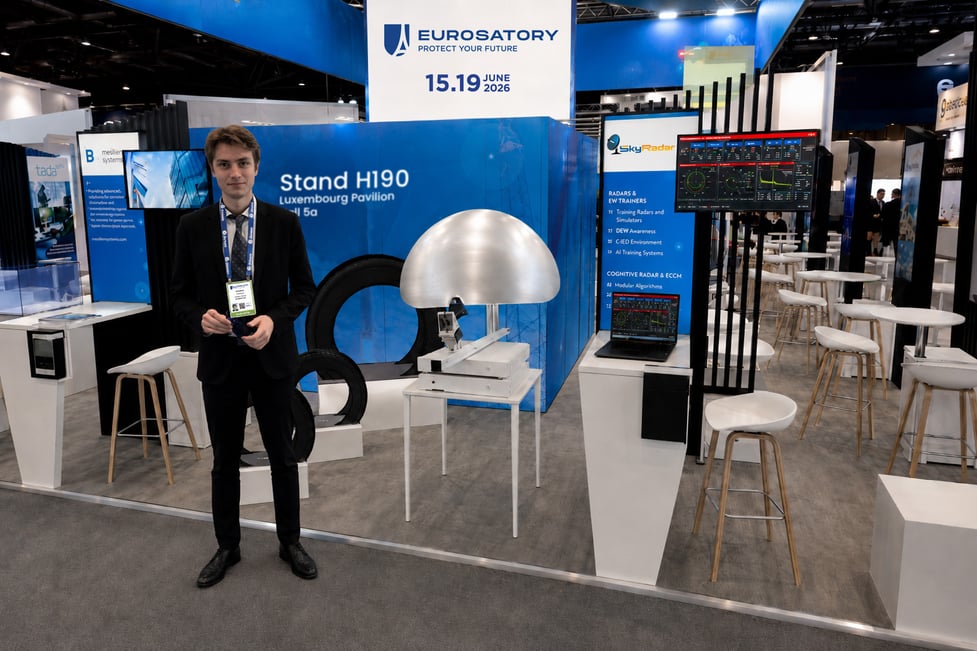
At the exhibition, SkyRadar will present radar and electronic warfare training technologies, including environments for cognitive radar, ECCM, radar simulation, and AI-supported signal analysis.
In a defence landscape where control of the electromagnetic spectrum is increasingly important, ECCM training helps prepare specialists to understand, analyse, and respond to the signal challenges that modern systems must face.
Write us to Make an Appointment with our Team

Eurosatory 2026 / 15–19 June 2026 / Paris / Luxembourg Pavilion – Hall 5a – Stand H190
How to get there? | Write us to arrange a meeting: info@SkyRadar.com